
The perfect storm is brewing for local ponds and small development lakes. I was writing this column in the fall of 1977. The conditions are the same now as they were then.
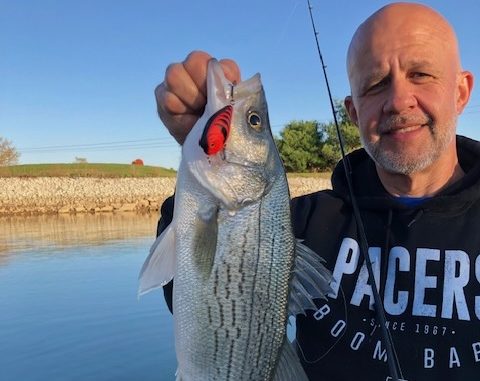
After Sunday’s Colts game, my son Greg and I went fishing at an exceptional pond. At about ten surface acres, this lake has four aerators. It is stocked with smallmouth bass, walleye, wipers, yellow perch, readers, and bluegills.
At full pool, the lake is pristine and almost weed-free. However, the water level is down several feet, and weeds grow just beneath the surface. Only next to the aerators could I let my swimbait sink deep.
I never use crankbaits to a fault. I like plastic worms and grubs. Greg decidedto tie on a red crankbait that runs only a foot under the surface. Dad ran the trolling motor and watched as his son landed 12 smallmouths over 14 inches and a three-pound wiper.
The only credit I’ll take is I taught him well. In our last five trips, my son has out-fished me by a wide margin.
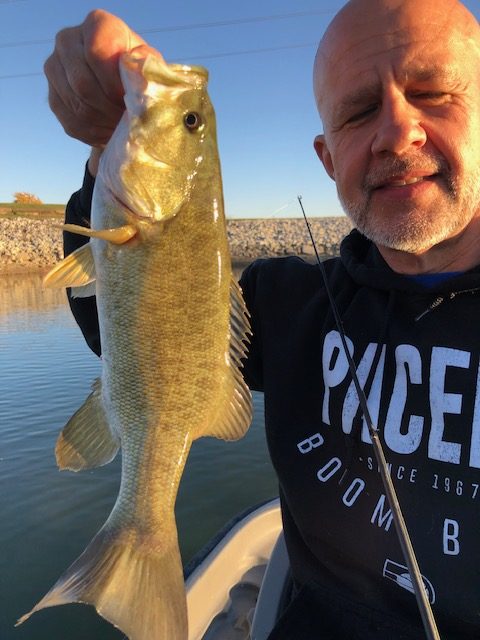
One cannot be one-uped going fishing by himself. Monday, I scouted for deer in Union County. On the way home, I stopped to fish a two-acre pond notorious for big crappie.
With a southern breeze, the bite was on, and the crappie was aggressive. Bluegill, bass, and slab crappie up to 18 inches fell for my offering. Whenever my plastic grub was destroyed, I tied on a different color. It didn’t seem to matter, although monkey milk metal flake with a chartreuse paddle-tail was probably the best.
This pond was low, too. I was casting into six feet of water and letting my jig fall to one-thousand-four or five.
I called Crappie Pro James Lasswell to give him a play-by-play and sent photos. I described the action with my phone on speaker lying on the dock. “This one is only 13 inches,” I said. “How many times have you ever said that,” James asked.

I’m worried about the low water levels in small lakes and ponds. Sunlight penetration has allowed exceptional weed growth. If we don’t get enough rain to fill these waters, a catastrophe may occur.
When a lake freezes and then becomes snow-covered, photosynthesis stops. Instead of producing oxygen, the weeds begin dying and giving off carbon dioxide.
Many Midwest lakes had a total fish kill after the 1978 blizzard. I recall visiting a development pond. A thin layer of ice remained. On the last safe ice, fishermen had drilled several holes that had not refrozen.
The oxygen was depleted, and fish jumped out of the holes in a vain attempt to save themselves. I could see hundreds more floating dead under the surface.
Geist Reservoir had a massive die-off of shad. This was a good thing. Those rotting fish made it unpleasant to be near that lake for awhile.
Weather forecasters predict a mild winter with above-normal precipitation. Let us hope it is more rain than snow.

Be the first to comment